

How to Find Your Signature Scent Without a Mall Counter
A mall counter is designed to overwhelm you. Bright lights, ten blotters, a cloud of other people’s choices hanging in the air. You walk in curious and walk out nose-blind, pressured, and unsure.
If you want to find signature scent, you need a calmer environment and a cleaner method. Think of it like skin care: a little structure beats intensity every time. In Miami, that matters even more. Heat, humidity, sunscreen, ocean air, and air-conditioned rooms can change how a fragrance blooms, softens, or clings.
This is the at-home approach I trust: clinical enough to be reliable, gentle enough to feel like a ritual.
Why Mall Counters Make Scent Decisions Worse
Your nose fatigues fast
After a handful of strong sniffs, your brain starts filtering the experience. That’s olfactory fatigue, and it makes everything smell the same. It also makes you buy louder scents than you’d actually enjoy wearing.
Paper strips are useful, but not honest
Blotters show the idea of a fragrance. Your skin reveals the truth. Skin has heat, oils, sweat, and a microbiome. That living surface changes the dry down.
Pressure distorts taste
Sales pressure pushes people toward “impressive” instead of “true.” A signature scent is not a performance. It’s the scent that fits your life on an ordinary Tuesday.
The At-Home Method to Find a Signature Scent (No Chaos)
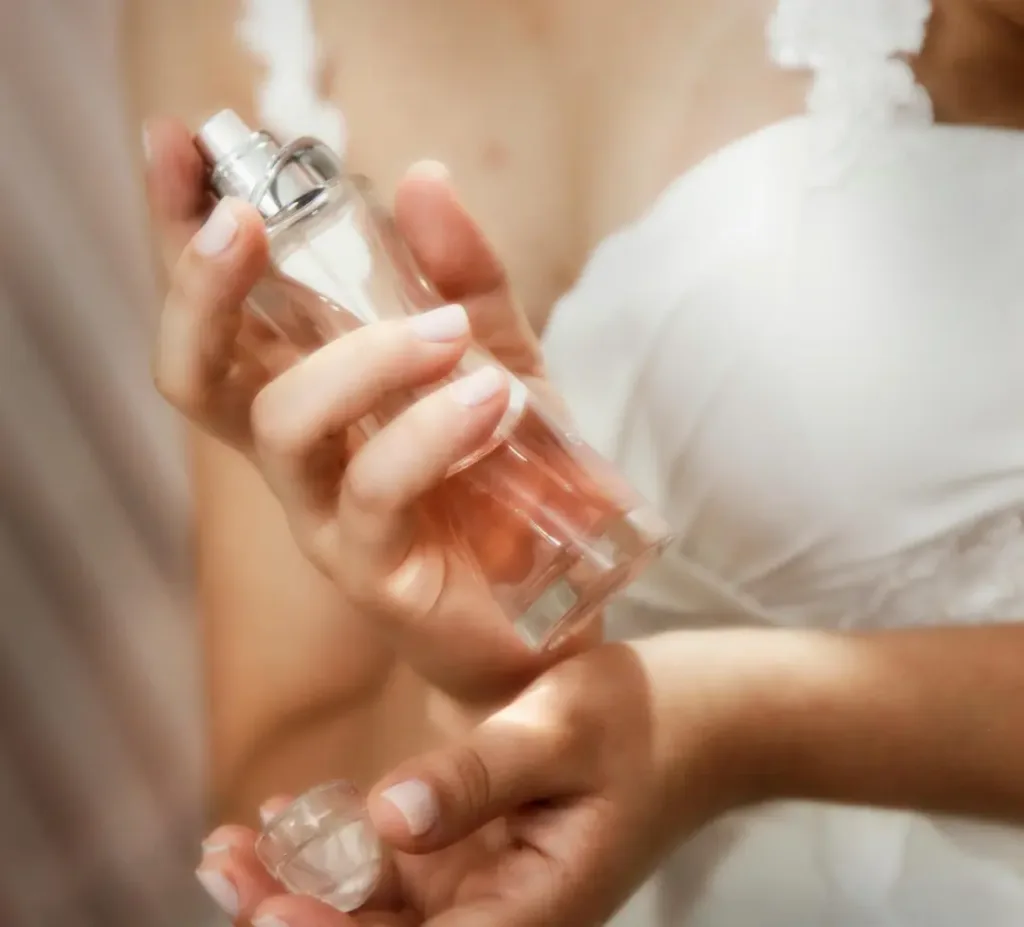
If you want to find signature scent without the counter circus, you need three tools and one rule.
Tools
- A fragrance wheel (to understand families and the “neighbors” you’re likely to enjoy)
- A simple scent journal (notes that capture your real reaction, not your mood)
- A small set of samples (a discovery set, mini sizes, or decants)
The rule
One scent per day rule.
No layering. No comparison stacks. You’re building clarity.
This becomes your fragrance testing routine: consistent, repeatable, and surprisingly calming.
Step 1: Do a 3-Minute Scent Profile Quiz (Without Calling It a Quiz)
Before you test anything, set your direction. Not the exact bottle. Just the neighborhood.
Ask:
- Do I want fresh or warm?
- Do I want skin-close or room-filling?
- Do I prefer dry or sweet?
- Do I want something botanical and green, or creamy and floral, or woody and grounded?
Now choose two “anchors” you already like (even if it’s from a soap, tea, or a place you’ve been):
- citrus, herbal, green
- soft florals, powder, clean musks
- woods, resins, smoke, earth
This is how you stop buying randomly and start building a real perfume decision method.
Step 2: Use the Fragrance Wheel Like a Map (Not a Trend)
A fragrance wheel is a classification tool that shows how scent families relate and overlap.
If you love one family, you often like the neighbors.
Examples:
- If you like fresh citrus, you may also like aromatic greens
- If you like soft musks, you may also like powdery florals
- If you like dry woods, you may also like amber-resin warmth (as long as it’s not too sweet)
This saves money because you stop “sampling the whole store.” You move with intention, family by family, note by note.
Step 3: Build a Small Fragrance Wardrobe (6 Samples, Not 60)
A signature scent is easier to identify when you give your nose contrast, not overload.
Here’s the sample schedule:
- 2 scents in your safe zone (what you think you like)
- 2 scents next door (neighbor families on the wheel)
- 2 wildcards (one curiosity, one challenge)
That’s your starter fragrance wardrobe. Enough variety to learn. Not enough to confuse you.
Step 4: The 7-Day Wear Test (Where Decisions Become Real)

This is where most people skip, and it’s the reason they keep buying the wrong bottle.
To find signature scent, do a true wear test:
How to test perfume on skin
Apply on clean, dry skin (inner forearm works well). Use the same amount each time (one spray, or one small roll-on swipe). Then check at:
- 15 minutes: opening
- 2 hours: heart
- 6 hours: dry down
What to write in your scent journal
Keep it simple. Three words at each checkpoint:
- “bright, green, airy.”
- “creamy, soft, calm.”
- “warm, skin-like, grounded.”
Then answer one question:
Do I want to smell this on myself again?
If yes, that’s data. If no, let it go.
Miami-Specific Reality: Heat, Humidity, Sunscreen, and AC
Miami doesn’t let fragrance sit still. You move through humidity, step into cold AC, then back into the sun. That swing changes projection, longevity, and even sweetness.
Florida climate guidance on humidity notes that dew points around 70°F can drive very high overnight/morning humidity, while afternoons often drop lower as temperatures rise. Source: Florida Climate Center
Practical Miami moves:
- Test one day with sunscreen and one day without. Sunscreen residue can change the scent’s dry down.
- If a scent turns too sweet in heat, apply lower (forearm instead of neck).
- If a scent disappears in AC, try a thin layer of unscented moisturizer first. Hydration helps fragrance cling.
Step 5: The Signature Fragrance Checklist (The Final Filter)

At the end of the week, don’t debate yourself into confusion. Use this checklist:
- Would I wear this on a normal day, not a special event?
- Does it feel like a companion, not a costume?
- Do I like the dry down more than the first ten minutes?
- Do I still enjoy it after being outside in Miami heat and inside in AC?
- Would I miss it if I ran out?
If you can say yes without forcing it, you can find your signature scent with confidence.
Skin sensitivity, patch testing, and calm safety
If you have sensitive skin, patch test on the inner elbow and wait 24 hours before full wear. If you get burning, itching, swelling, or a rash, stop using the product. If you ever experience severe symptoms or trouble breathing, call 911.
This isn’t fear. It’s respect for the body. A signature scent should feel like ease.
Build Your Signature Ritual Botanical Perfume Oils and Olfactory roll-ons
FAQs
How long does it take to find a signature scent?
Most people can decide within 7–14 days if they test properly: one scent per day, same dose, and real-life wear.
What if everything smells “nice” but nothing feels like me?
That usually means you’re sampling too wide, too fast. Narrow to one family (fresh, floral, woody, amber) and explore its neighbors using the fragrance wheel.
Should I choose a perfume oil or a spray as my signature scent?
Perfume oils often wear closer and feel more intimate. Sprays usually project more. In Miami, many people prefer a skin-close profile during the day and something warmer at night.
Why does a scent smell great in the bottle but weird on my skin?
Skin chemistry, sweat, product residue (especially sunscreen), and temperature all change the dry down. That’s why the 7-day skin test matters.
Can I have more than one signature scent?
Yes. Many people keep a small “signature wardrobe”: one for day, one for night, one for heat, one for cool evenings. The key is intention, not collection.
Conclusion
To find a signature scent, you don’t need a counter, a crowd, or a sales pitch. You need a method that respects the body and lets the fragrance speak over time.
One scent per day. Notes in a journal. A week of honest wear. Miami heat and AC included.
The right one won’t just smell good. It will feel like you.