

Your real currency is not money.
It is not status.
It is not how busy you look, how many people need you, or how much you can force yourself to carry.
Your real currency is energy.
Because without energy, you cannot focus.
You cannot create.
You cannot make clean decisions.
You cannot show up powerfully in your work, your relationships, your business, your purpose, or your own body.
And here is the uncomfortable truth:
Most people are not tired because they are doing too much.
They are tired because they are leaking energy.
They are replaying the conversation.
Rehearsing the argument.
Absorbing someone else’s mood.
Responding too quickly.
Carrying emotional noise that was never theirs to hold.
In Episode 2 of My Many Selves, Damaris introduces a powerful idea: energy is the hidden currency behind productivity, peace, and personal power. She shares three practical techniques for protecting that energy when people, situations, or emotional loops threaten to drain it: Drop and Block, Look and Look Off, and Stick a Pin in It.
These are not fluffy mindset tricks.
They are emotional survival tools.
And when you understand how the brain works, they make even more sense.
Research on rumination shows that repetitive negative thinking can demand executive resources, narrow attention, and interfere with problem-solving. In plain English: when your mind keeps chewing on pain, your energy is being spent without your permission.
So the question is not, “How do I become more positive?”
The real question is:
How do I stop donating my energy to things that are draining me?
Let’s break down the three techniques.
1. Drop and Block: Stop Feeding the Mental Loop

You know the loop.
Someone hurts you.
Someone disappoints you.
Someone disrespects you.
Something embarrassing happens.
Something unfair happens.
And even when the event is over, your mind keeps bringing it back.
You replay it in the shower.
In the car.
While working.
Before bed.
In the middle of a perfectly good day.
That is not reflection anymore.
That is emotional self-torture.
Damaris calls the first technique Drop and Block.
The idea is simple: when the painful thought appears, you do not wrestle with it. You do not try to “stop thinking.” That usually backfires. Instead, you replace it.
A word.
A prayer.
A mantra.
An affirmation.
A memory.
A visual image.
A phrase that brings warmth, power, or peace.
You drop the draining thought.
Then you block it by giving the mind something else to hold.
This works because the brain does not respond well to a blank command like, “Stop thinking about it.” The mind needs a new object. A new anchor. A new direction.
Acceptance and Commitment Therapy uses a related concept called cognitive defusion, which means stepping back from thoughts so they have less control over behavior.
That is exactly the power of Drop and Block.
You are not pretending the hurt did not happen.
You are refusing to keep feeding it.
Try This Drop and Block Ritual
The next time a painful thought comes up, say:
“Not today. My energy is required elsewhere.”
Then immediately replace the thought with one chosen anchor:
A phrase: “I return to myself.”
A visual: a door closing behind you.
A breath: inhale for four, exhale for six.
A scent cue: inhale a grounding, clarifying scent and let it mark the energetic shift.
This is where ritual becomes powerful.
A scent can become a physical cue for the brain:
We are done feeding this loop now.
That is the moment you stop leaking energy.
That is the moment you come back to yourself.
2. Look and Look Off: Stop Absorbing What Is Thrown at You

Some people walk into a room and your body reacts before your mind even catches up.
Your shoulders tighten.
Your stomach drops.
Your jaw locks.
Your mood changes.
They have not even done anything yet.
But your system remembers.
Damaris describes this exact experience in the episode. She was working with someone antagonistic, and every meeting created a physical reaction. Then she asked herself a critical question:
Why should I allow someone else to have this much power over me?
That question is the beginning of energetic authority.
The technique she created is called Look and Look Off.
You can see the person.
You can hear the comment.
You can notice the energy.
But you do not have to absorb it.
Someone can throw a mood, a criticism, a look, a tone, or a subtle insult.
You do not have to catch it.
That is the whole point.
Look and Look Off is not denial. It is selective attention. It is the decision to stop giving full-body access to every person who wants a reaction from you.
Your attention is not neutral.
Your attention is a form of payment.
Every time you lock onto someone’s drama, your body pays.
Every time you replay their tone, your nervous system pays.
Every time you prepare a defense for a battle that has not even started, your focus pays.
So do not just protect your calendar.
Protect your attention.
Try This Look and Look Off Ritual
When someone tries to pull you into their emotional field, silently say:
“I see it. I do not receive it.”
Then shift your attention to something physical:
Your breath.
Your feet.
Your hands.
A scent near your face.
The task in front of you.
This gives your old brain something simple and immediate: a new sensory target.
Instead of locking onto the threat, you lock onto the ritual.
Instead of absorbing the energy, you redirect.
That is how you take your power back in real time.
3. Stick a Pin in It: Not Everything Deserves an Immediate Response

This may be the hardest one.
Because modern life trains you to respond instantly.
Text back now.
Explain now.
Defend yourself now.
Answer the email now.
Fix the tension now.
Have the conversation now.
But not every situation deserves immediate access to your energy.
Damaris shares a moment when she had an important business presentation the next morning, while a personal argument was escalating the night before. Instead of giving the argument her full emotional battery, she chose to Stick a Pin in It. She decided to come back to it later, after the priority moment had passed.
That decision protected her preparation.
And the next day, she got the contract.
That is the point.
Sometimes protecting your energy is not about avoiding hard conversations.
It is about choosing the right time to have them.
There is a difference between avoidance and intelligent delay.
Avoidance says:
“I will never deal with this.”
Intelligent delay says:
“I will deal with this when I have the energy, clarity, and timing to respond well.”
A pause gives your brain a chance to lead instead of letting your trigger drive the car.
Try This Stick a Pin in It Script
Use this when someone demands an immediate emotional response:
“I want to give this the right attention, and I do not have the bandwidth to discuss it properly right now. I’ll come back to it when I can be fully present.”
That is not weakness.
That is power.
That is self-command.
That is how you stop sacrificing tomorrow’s opportunity for tonight’s emotional storm.
Turn the Technique Into a Ritual: Clear Mind
Here is where most people fail.
They understand the idea.
They even like the idea.
But in the moment of stress, conflict, rumination, or emotional overload, the idea disappears.
Why?
Because the old brain does not want a lecture.
It wants a signal.
A breath.
A scent.
A physical action.
A quick sensory interruption that says:
Stop. Reset. Come back.
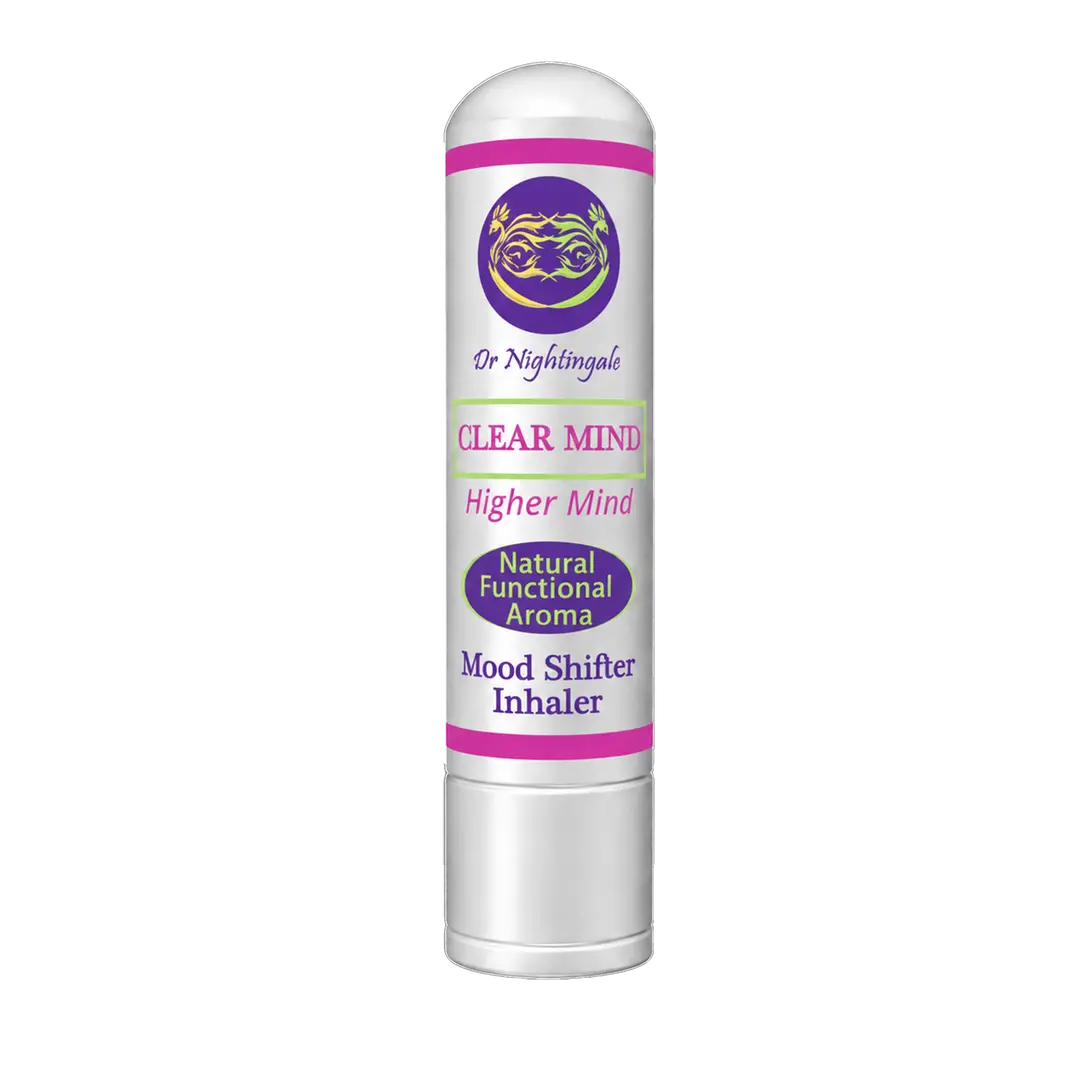
That is why Clear Mind – Higher Mind Mood Shifter Inhaler fits so naturally with this energy protection practice.
Clear Mind is a portable aromatherapy inhaler created for moments when you want to pause, take a breath, and return to what is in front of you. It is positioned for use while working, studying, journaling, meditating, traveling, or moving through a demanding day.
In other words, it is not just a scent.
It is a pattern interrupt.
It gives your brain and body a physical ritual for the exact moment your energy starts leaking.
When your thoughts start spinning, your energy starts draining.
When someone else’s mood starts pulling you in, your energy starts scattering.
When a badly timed conflict demands a response, your energy starts leaving the thing that actually matters.
That is when you reach for Clear Mind.
Open.
Inhale.
Pause.
Choose again.
The aroma opens with fresh herbal and citrus notes, then settles into softer floral and earthy depth. The formula includes rosemary, basil, sage, mandarin, lavender, rose, geranium, patchouli, spikenard, and labdanum.
This matters because the ingredient story supports the emotional promise.
Rosemary has been studied for its relationship to cognitive performance and mood through exposure to rosemary essential oil aroma and its compound 1,8-cineole.
Lavender has been studied for anxiety and calming support, with systematic reviews suggesting favorable effects while also noting that results can vary by method and study design.
Rose and lavender have also appeared in broader essential oil anxiety research, including a network meta-analysis of randomized controlled trials.
The claim is not that Clear Mind “fixes” your life.
The stronger claim is this:
Clear Mind gives you a sensory reset when your energy needs protection.
That is believable.
That is usable.
That is powerful.
Use Clear Mind With the 3 Energy Protection Techniques
For Drop and Block:
When the painful thought appears, inhale Clear Mind and say:
“I return to myself.”
Do not negotiate with the loop. Replace it.
For Look and Look Off:
After a heavy interaction, inhale Clear Mind and say:
“I see it. I do not receive it.”
Do not absorb what was thrown at you. Let it pass.
For Stick a Pin in It:
Before returning to your real priority, inhale Clear Mind and say:
“This can wait. My energy has a mission.”
Do not hand your power to a moment that does not deserve immediate access.
This is not about pretending life is calm.
It is about training your body to come back to clarity faster.
Your energy is the real currency. Clear Mind helps you stop spending it on what does not deserve you.
Why These Techniques Work: The Brain Wants Relief, Contrast, and Control
The old brain responds to what is immediate, emotional, and survival-based.
That is why energy leaks feel so urgent.
A rude comment can feel like a threat.
A conflict can feel like danger.
A rejection can feel like exile.
A repeated thought can feel like reality.
The brain does not always respond to logic first.
It responds to what feels emotionally important.
That is why telling yourself, “I should not care,” rarely works.
You need something more primal.
You need a direct interruption.
A phrase.
A breath.
A scent.
A physical ritual.
A decision.
You need something strong enough to tell the nervous system:
We are not spending energy here anymore.
That is why the three techniques work so well together.
Drop and Block protects you from inner loops.
Look and Look Off protects you from external emotional hooks.
Stick a Pin in It protects your priorities from badly timed conflict.
And Clear Mind helps make those techniques physical.
Not theoretical.
Physical.
You inhale.
You pause.
You choose.
That is energy hygiene.
That is emotional discipline.
That is personal power.
The 3-Minute Energy Protection Practice

Use this anytime you feel drained, distracted, angry, scattered, or emotionally hijacked.
Minute 1: Drop and Block
Notice the thought that keeps repeating.
Name it:
“This is the loop.”
Then replace it:
“I return to my energy.”
Inhale Clear Mind.
Let the scent become the signal.
Minute 2: Look and Look Off
Notice what you are absorbing.
Ask:
“Is this mine to carry?”
If not, release it.
Say:
“I see it. I do not receive it.”
Bring your attention back to your body.
Minute 3: Stick a Pin in It
Identify what does not need your immediate response.
Say:
“This can wait. My energy has a priority.”
Then choose one next action that actually matters.
Send the email.
Finish the task.
Prepare the presentation.
Take the shower.
Go to sleep.
Protect the opportunity.
This is how you stop letting other people, old pain, and emotional noise spend your energy for you.
When to Use Clear Mind
You are caught in a thought loop.
You need to focus after an emotional interaction.
You are about to enter a meeting, study session, work block, or difficult conversation.
You feel mentally crowded.
You need a quick ritual before journaling, meditating, traveling, or planning.
You want to pause before reacting.
You want to protect your peace without disappearing from your life.
Keep it near your desk.
Keep it in your bag.
Keep it close when you know your mind tends to wander into old conversations, unfinished arguments, or other people’s emotional weather.
Because the moment your energy starts leaking is the moment you need a reset.
Not later.
Now.
Final Thought: Stop Letting Pain Spend Your Energy
You do not need to respond to every trigger.
You do not need to absorb every mood.
You do not need to replay every hurt.
You do not need to sacrifice your focus just because someone else created emotional noise.
Your energy is not public property.
It is sacred fuel.
And when you protect it, you become harder to manipulate, harder to drain, and easier to direct toward the life you actually want.
So the next time your mind loops, someone antagonizes you, or conflict demands instant access to your nervous system, remember:
Drop and Block.
Look and Look Off.
Stick a Pin in It.
Then reach for Clear Mind.
Open.
Inhale.
Return.
Protect your energy.
Because your energy is the real currency.
FAQ
What does it mean to protect your energy?
Protecting your energy means becoming intentional about where your attention, emotional reactions, and mental effort go. It includes setting boundaries, redirecting repetitive thoughts, refusing to absorb other people’s negativity, and delaying non-urgent conflict until you can respond with clarity.
How do I stop replaying painful thoughts?
Use the Drop and Block technique. When the thought appears, do not argue with it. Replace it with a chosen phrase, prayer, affirmation, memory, image, breath, or scent cue. The goal is to stop feeding the loop and redirect your mind toward something stabilizing.
What is an energy boundary?
An energy boundary is a mental, emotional, or physical practice that protects your focus and nervous system. It helps you decide what deserves your response, what deserves your attention, and what you need to release.
Can scent help with focus and emotional grounding?
Scent can support focus and grounding when used as part of a ritual. Clear Mind uses rosemary, basil, sage, mandarin, lavender, rose, geranium, patchouli, spikenard, and labdanum to create a fresh herbal, citrus, floral, and earthy aroma designed for pause, breath, and mental reset.
Is Clear Mind a medical treatment?
No. Clear Mind is a personal aromatherapy ritual, not a medical treatment. It is designed to support a sensory pause and help you return to your intention. It is not intended to diagnose, treat, cure, or prevent any disease.
Is delaying a difficult conversation avoidance?
Not always. Avoidance means refusing to deal with something. Strategic delay means choosing a better time to respond so you can protect your energy, priorities, and emotional clarity.