

You are not failing because the role you were handed feels wrong.
You may simply be trying to live inside a script written for someone else. Exploring gender roles and identity begins with noticing which expectations fit your life and which leave important parts of you unexpressed.
This article expands on Episode 12 of the My Many Selves podcast with Damaris Nightingale, where she explores genderism, prescribed gender roles, and the distinction between sex, social expectations, and the qualities often described as masculine, feminine, yin, and yang.
Her invitation is not to draw conclusions about yourself or anyone else.
It is simply to observe.
Because masculine is not male. Feminine is not female. A quality is not a biological category, and no person should be diminished for carrying qualities that do not match a social expectation.
Key takeaways
Gender, social roles, and personal qualities are different things.
“Masculine” and “feminine” are illustrative qualities, not instructions for how anyone must live.
Yin and yang qualities can appear differently across the mental, emotional, sexual, and many other dimensions of a person.
Role incongruity can create strain when the role expected of you conflicts with the way you naturally express yourself.
A fragrance has no gender. A scent wardrobe can mark the many qualities you move through each day.
The yin/yang model in this article is Damaris’s spiritual and philosophical framework, not an established scientific system.
Gender, roles, and qualities are not the same thing
Damaris describes genderism as the belief that a person’s sex determines their roles, personality, identity, and qualities.
That is where the trouble begins.
There is sex, generally assigned at birth based on bodily characteristics, and there is gender identity, a person’s sense of their gender. There are also the social roles that different cultures and families attach to a person’s sex or perceived gender. And then there are qualities often described as masculine or feminine.
These are not interchangeable.
- Sex: bodily characteristics; these do not dictate personality, work, temperament, or a household role.
- Social role: expectations about who should provide, nurture, lead, follow, earn, or stay home. An expectation does not establish whether a role fits a particular person.
- Masculine or feminine qualities: culturally influenced descriptions of tendencies, rather than rules about identity or ability.
- Yin and yang: Damaris’s reflective framework for contrasting qualities, rather than fixed categories for people.
Damaris is careful to distinguish the quality described as masculine from the category male.
A male person can carry qualities often described as feminine. A female person can carry qualities often described as masculine. One person can carry both across different dimensions of life.
This is the distinction that allows the many selves to breathe.
What gender stereotypes cost us
A man who is receptive, nurturing, sentimental, less inclined to initiate, or more comfortable following may be made to feel lesser.
A woman who is direct, entrepreneurial, forceful, or willing to take risks may be described as somehow failing to be feminine.
The real pain is not that people are different.
The pain is being diminished for qualities that are simply theirs.
Damaris offers a model of polarisation for reflection. Imagine that every person carries yin and yang qualities, and that one quality may be more pronounced in a particular dimension. That does not make the person entirely yin or entirely yang.
One person may be more yang in the way they think and more yin in the way they relate emotionally. Another may reverse that pattern. A third may move differently in work, family life, creativity, intimacy, and friendship.
These are illustrations, not measurements of human worth.
“Opposite but same”: where Damaris sees friction
Imagine two people, A and B.
Gender-wise, A is female and B is male. Emotionally, A may be more yang: direct, forceful, and less easily moved to tears. B may be more yin emotionally: receptive, sentimental, and tender.
In the mental dimension, the pattern may change again.
Damaris’s point is that friction is not automatically created by a woman being yang or a man being yin. In her framework, the sharper friction appears when two people are polarised toward the same end of the same dimension.
This is what she means by opposite but same.
- Same measure: hot and cold describe temperature; tall and short describe height.
- Different measures: tall and warm describe different things and are not opposites.
- The reflective question: do your differences concern the same quality, or are you expressing qualities in different areas of life?
Similarity and complementarity are questions researchers study in specific contexts; neither gives a simple rule for every relationship. Damaris’s model is best used as a question:
“Where are we truly different, and where are we the same in a way neither of us has named?”
Sometimes a person appears soft while managing everything with an iron fist. Sometimes a man displays bravado while being a softie beneath it. People are complex, and at different levels we are different things.

The roles that fit someone else
Damaris tells the story of a client with a loving husband, a beautiful home, and a life that appeared comfortable from the outside.
She was the homemaker. She managed the household and did the things society often associates with women.
But she was terrible at it.
It was not her thing, and she was miserable. She had pigeonholed herself into a role because she believed it was supposed to suit her.
Eventually, she and her husband spoke honestly. Damaris encouraged her to name the unexpressed sides of herself and find a workable arrangement. The woman wanted to return to the workforce, and she did.
The important counterweight is this: for another woman, staying home may be exactly right. Some people love creating a beautiful home and caring for a family. There is nothing lesser about that either.
There is no one-size-fits-all arrangement.
Damaris has also seen the reverse: a woman with powerful business instincts and a natural ability to make money, while her husband was better suited to managing the home.
They agreed that the person earning more would continue in that work, while the other person would run the household. The home was impeccable. The children spoke several languages. Everything was carefully managed.
She went out, made the money, and handed it over. He handled the budgeting, family details, and domestic responsibilities.
The relationship worked because neither person was forced to perform a role simply because of gender.
Men who feel “less than”
Damaris has spoken with men who felt diminished because they could not fulfil the expected role of breadwinner, leader, or provider.
Some were more nurturing. Some were more comfortable following. Some did not want to be the person who ran in front when a dog appeared.
What is wrong with that?
Damaris uses humour to question the assumption that one person must always be the protector. The useful point is that tenderness, courage, and initiative do not belong exclusively to any gender.
A man who is not naturally a leader is not automatically weak. A man who is tender is not automatically incapable. A man may be successful in business, art, teaching, or any other field while carrying a soft and receptive emotional quality.
Research on precarious manhood, including work by Joseph Vandello and Jennifer Bosson, examines the cultural idea that manhood must be earned, publicly demonstrated, and defended. This research does not prove that men are inherently one way. It helps explain why prescribed expectations can create strain when someone feels watched, judged, or “less than” for failing to perform them.
Damaris’s point is compassionate: a role that does not fit can create strain and pressure, especially when boys are taught early that they should not cry or show feeling.
The sadness in her classmate’s eyes
One of the most vivid stories from the episode is about a classmate Damaris had not seen in years.
The woman had married, had three children, and lived very well in Europe with her husband, who was a doctor.
From the outside, she had the life many people would envy.
But she was miserable.
She did not want to stay home. She did not want to be the family caregiver. She wanted to be in the world, making money and doing things.
Damaris says she has never forgotten the sadness in her classmate’s eyes.
Years later, she still remembered thinking, “Well, let me marry him and stay at home,” although she was not sure she could have lived that way either.
There was another layer: sometimes the person who earns the money believes they control the life of the person who stays home. That can happen whether the moneymaker is a man or a woman.
The issue is not which person earns.
The issue is whether money becomes power over another person’s life.
Role incongruity and the life you were handed
Social-psychological research uses the term role incongruity for the tension that appears when expectations attached to one role conflict with expectations attached to another.
Alice Eagly and Steven Karau’s role-congruity research, for example, examined how leadership expectations can clash with gender stereotypes in the way people evaluate women in leadership. The research concerns social expectations and bias, not a statement about what women or men are naturally capable of doing.
That distinction matters here.
The question is not, “What should women do?” or “What should men do?”
The question is:
“What happens when a person’s actual qualities do not fit the role they are expected to perform?”
Sometimes the answer is silence. Sometimes resentment. Sometimes visible strain. Sometimes a relationship becomes lonely because both people are trying to live according to an outside script.
And sometimes the answer is a conversation that changes everything.
The dance is not fixed
Life does not remain still.
A separation, illness, job loss, family change, or shifting financial reality may require one person to step into a different role. Someone who once earned may begin managing the home. Someone who once followed may suddenly need to lead.
This is why Damaris describes yin and yang as a dance.
Sometimes you are softer. Sometimes harder.
Sometimes you take the risk. Sometimes you pull back.
Sometimes you speak directly. Sometimes you receive.
If the way you express yourself fits familiar societal norms, perfect. Damaris is not against societal norms. She is simply inviting other forms of seeing and being to the table.
Fathers cry at weddings. Mothers can be staunch. A woman may wear the loveliest perfume and highest heels while still carrying the yang principle in her household.
And when Damaris calls a woman yang, she does not mean every aspect of that woman is yang. The dimensions matter.
A man may be yin emotionally and still build a remarkable business. A woman may be yang mentally and still be deeply receptive in another part of her life.
Perfectly fine.
A fragrance has no gender
If we are many selves carrying many qualities, then one fragrance cannot represent the whole person.
No scent belongs to a gender.
A fragrance can be green and bright, warm and resinous, floral and soft, woody and deep, herbal, spicy, earthy, or luminous. Choose by quality, not by aisle.
A natural perfume elixir can mark the quality you are stepping into today. An inhaler can become a small private ritual before a conversation. A roll-on can mark a transition between roles.
This is intentional living in sensory form.
It is also why a fragrance wardrobe can be more honest than a single signature scent. You are not one note.
A fragrance wardrobe for your many selves
Choose by aromatic character and personal preference rather than a gender label. A scent ritual can mark a transition between roles without defining who you must be.
Explore different scent directions
The Olfactory Ritual Inhaler Collection offers several aromatic directions in a portable format. Explore a scent wardrobe when one signature fragrance feels too narrow for the different parts of your day.
Mark an honest conversation
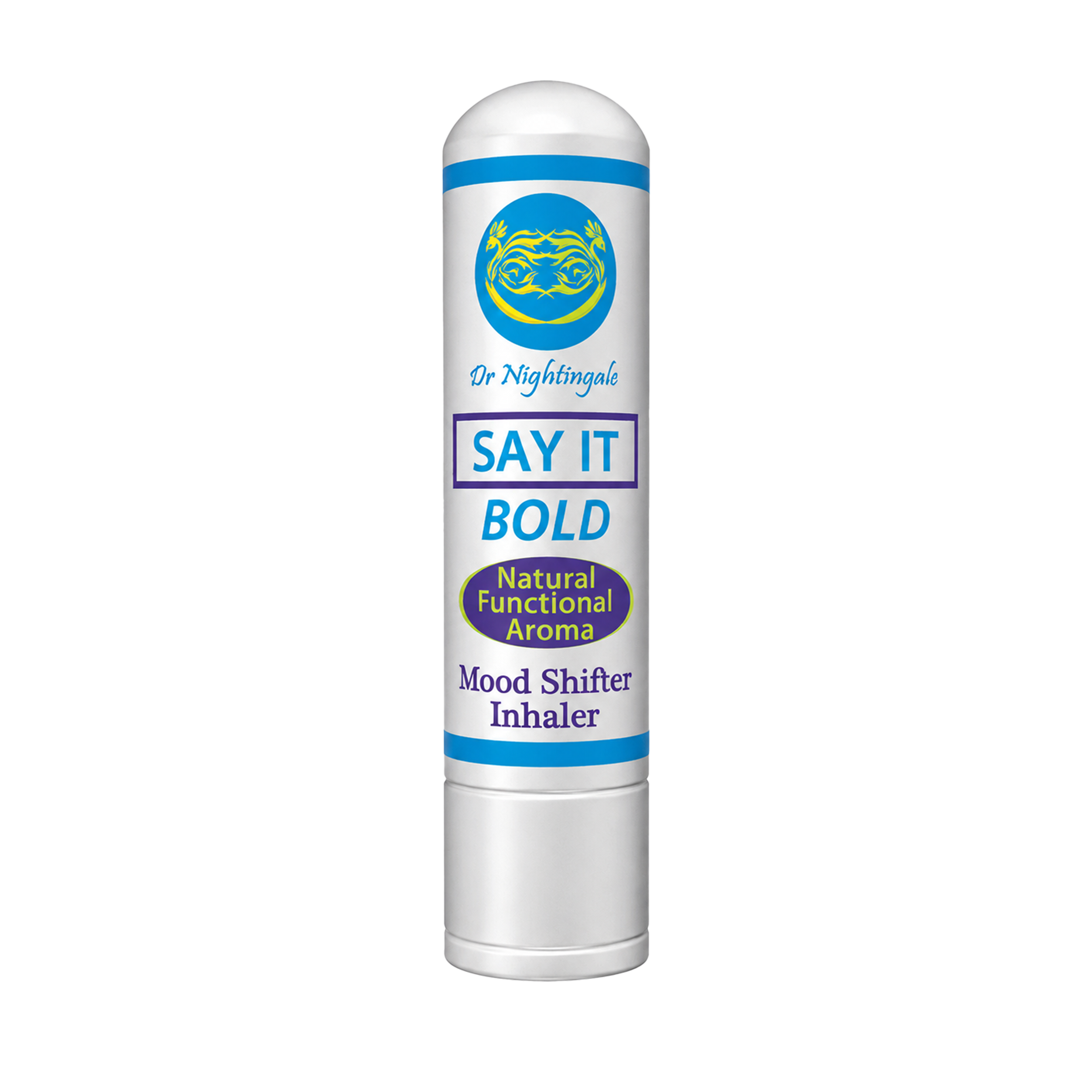
Say It Bold Mood Shifter Inhaler has fresh, floral, and woody notes. Let the familiar gesture of opening it mark a pause before you name an unexpressed part of yourself. The Say It Bold Roll-On offers a skin-worn format; follow its label directions.
Choose the aroma you enjoy
Happily Perfume Elixir combines herbal, floral, and earthy scent notes. A soft or floral fragrance is available to anyone who enjoys it. These are choices about scent and symbolism, not promises to change identity, relationships, or health.
A final invitation: observe your own life
Look at your own life and the lives around you.
Do not rush to conclusions.
Ask where a role fits, where it does not, and where someone has been performing an identity simply because they were told it was theirs.
There are many definitions of what it means to be a woman. There are many definitions of what it means to be a man. There are many ways for people to meet, share responsibilities, and create a coherent relationship.
The work is not to force everyone into one arrangement.
The work is to make room for the many selves already present.
For more conversations from Damaris Nightingale, visit mymanyselves.com.
A caring note: Scented Potions products are cosmetic and wellness products, not intended to diagnose, treat, cure, or prevent disease. If the distance between who you are and the role you are living feels larger than you can work through alone, speaking with a trusted person or qualified professional is a strength, not a failure.
Related reading from Scented Potions
- Perfume as an Archetype: Scent and Identity
- King Konga Energy: Lead Without Carrying Everything
- Becoming More You: A Scent Ritual for Your Many Selves
Frequently asked questions
What does “masculine is not male” mean?
It means that masculine is a descriptive quality, while male is a sex category. A person’s qualities do not automatically follow from their gender.
What are yin and yang qualities?
In Damaris’s model, yin and yang are contrasting qualities that may appear in different dimensions of a person. This is a spiritual and philosophical framework for reflection, not an established scientific system.
How do gender roles affect identity?
Gender roles can shape what people expect from themselves and one another. When those expectations conflict with a person’s natural preferences, role incongruity may create strain and distance from the authentic self.
Can a man have feminine qualities?
Yes. A man may be receptive, nurturing, sentimental, or soft in one dimension while being highly capable in business, art, leadership, or another area.
Can a woman have masculine qualities?
Yes. A woman may be direct, entrepreneurial, risk-taking, or forceful in one dimension while also being tender, receptive, or traditionally feminine in another.
What is role incongruity?
Role incongruity describes a perceived mismatch between the expectations attached to a person and the expectations attached to the role they occupy. Research uses the concept to examine social evaluation and cultural bias.
Does fragrance have a gender?
Fragrance is not inherently tied to a gender. People may assign scents to gender categories through advertising or custom, but anyone can choose a green, floral, woody, resinous, herbal, or spicy fragrance.
How can scent become part of intentional living?
Choose a fragrance by the quality you want to mark, such as softness, rootedness, warmth, brightness, or force. Apply or inhale it as a repeated personal ritual before stepping into that part of your day.
Where can I listen to Episode 12 of My Many Selves?
Visit mymanyselves.com to explore the podcast and continue the conversation about identity, gender roles, qualities, and the many selves within us.
